


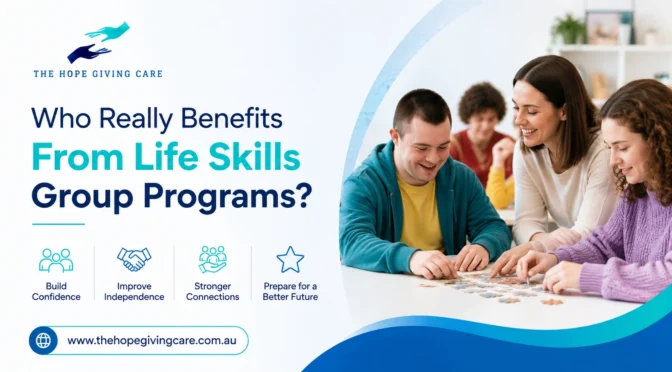
People from many different backgrounds can benefit from life skills group programs, especially those looking to build confidence, independence, and stronger social connections. As a trusted NDIS provider, The Hope Giving Care supports participants every step of the journey, helping them find programs that align with their goals while providing compassionate guidance and personalised support throughout the process.
Why Does Group Learning Work Differently?
Disability group activities Melbourne provide a supportive environment where participants learn alongside others with shared experiences. Observing peers practise everyday tasks builds confidence, eases anxiety, and encourages meaningful social interaction. Celebrating achievements together creates lasting motivation, stronger connections, and a more enjoyable learning experience.
People Building Everyday Independence
For people developing practical daily living skills, life skills group programs provide structured guidance in cooking, budgeting, shopping, cleaning, and personal organisation. Regular practice in a supportive setting helps participants gain confidence, improve decision-making, and become more independent in everyday routines.
Young Adults Preparing For More Independent Living
Transitioning into adulthood can feel overwhelming, but NDIS funded activities Melbourne offer a safe place to practise essential responsibilities. Young adults build confidence through budgeting, meal preparation, household management, and self-care while learning valuable lessons from both facilitators and fellow participants.
People Wanting To Strengthen Social And Communication Skills
Many participants join life skills group programs to improve communication, build friendships, and develop social confidence. NDIS group activities Melbourne encourage conversation, teamwork, active listening, and respectful interaction, helping individuals feel more comfortable and connected in everyday social situations.
People Seeking Community Connection And Reduced Isolation
Beyond learning practical skills, NDIS group activities Melbourne help reduce isolation by creating regular opportunities for social connection. Participants form meaningful friendships, enjoy shared experiences, and develop a stronger sense of belonging, improving both confidence and overall emotional wellbeing.
Families And Carers Looking For Reliable, Structured Support
Life skills group programs give families peace of mind by offering safe, engaging activities supported by experienced professionals. With The Hope Giving Care, participants enjoy meaningful learning opportunities while carers benefit from reassurance, trusted support, and valuable time to focus on their own wellbeing.
People With Varying Support Needs
Quality NDIS group activities are designed to accommodate different abilities, learning styles, and support requirements. Flexible activities, smaller groups, and personalised guidance ensure participants can learn comfortably, progress at their own pace, and enjoy positive, meaningful experiences.
How To Know If A Group Program Is The Right Fit?
Choosing life skills group programs depends on individual goals, preferences, and learning styles. People who enjoy social interaction often thrive in group settings, while others may benefit from combining group participation with one-on-one support for a balanced learning experience.
Concluding Remarks
Life skills group programs empower participants to build confidence, develop practical everyday abilities, and form meaningful social connections. With personalised support from The Hope Giving Care, participants can strengthen their independence while enjoying a welcoming environment that encourages growth and community participation.
Get In Touch
We’d love to hear from you and help you find the group program that fits your goals.Call us at 0424 694 042 or email us at hopegivingcare@icloud.com
Frequently Asked Questions
What Are Life Skills Group Programs?
Group and centre based activities Victoria are structured sessions that help participants develop practical, social, and personal skills in a supportive group environment. They encourage confidence, independence, and meaningful participation through engaging, everyday activities.
How Do Group Programs Differ From One-On-One Support?
Group programs encourage teamwork and shared learning, while individual support provides personalised guidance. The Hope Giving Care offers both approaches, helping participants build confidence, independence, and meaningful everyday skills.
Can Someone Join If They Have Never Attended A Group Before?
Absolutely. Many participants are new to group settings. Skilled facilitators create a welcoming atmosphere, helping everyone settle in comfortably and participate at a pace that feels right for them.
What Types Of Activities Are Included In Group Activities Ndis?
Activities often include cooking, budgeting, communication exercises, problem-solving, community outings, creative projects, and other practical tasks that help participants build confidence and everyday independence.
Are Life Skills Group Programs Suitable For Different Age Groups?
Yes. Many providers organise groups based on age, interests, or individual goals, creating an environment where participants can connect with others in similar stages of life.
Do Participants Need Previous Experience Before Joining?
Not at all. Group and centre based activities Melbourne are designed for people with varying experience levels. Participants are encouraged to learn at their own pace without feeling pressured.
How Are Participants Matched With The Right Group?
The Hope Giving Care carefully considers each participant’s goals, interests, communication style, and support needs to recommend a life skills group that encourages comfort, confidence, meaningful learning, and personal growth.
How Often Do Group And Centre Based Activities NDIS Take Place?
Session schedules vary depending on the provider. Some programs run weekly, while others offer multiple sessions each week or specialised workshops throughout the year.
Can Participants Work Towards Personal Goals During Group Sessions?
Yes. Activities are often planned to support individual goals, allowing participants to strengthen practical skills while making steady progress towards greater independence and community involvement.
What Should Participants Bring To A Session?
Most sessions simply require comfortable clothing and a willingness to participate. If any specific materials are needed for an activity, the provider will usually let participants know beforehand.
Can Participants Build Lasting Friendships Through NDIS Group Centre Activities?
Yes. Regular sessions often help participants develop meaningful friendships, strengthen social connections, and enjoy a greater sense of belonging within their local community.
How Do Facilitators Encourage Everyone To Participate?
Facilitators create an inclusive and supportive environment where participants are encouraged to contribute naturally. Gentle guidance and positive reinforcement help build confidence without making anyone feel pressured.
Do Life Skills Group Programs Include Community Activities?
Many NDIS group and centre based activities include supervised outings such as shopping, café visits, public transport practice, or local community events, giving participants opportunities to apply their skills in real-life situations.
How Is Progress Measured Throughout The Program?
Progress is typically reviewed through ongoing observations, discussions, goal tracking, and feedback from participants, families, and support teams to ensure continued growth and development.
How Can Someone Get Started With Life Skills Group Programs?
Getting started usually begins with a conversation with the provider about personal goals, support needs, and interests. This helps identify the most suitable group centre activities NDIS and ensures participants receive the right level of support from day one.

